
What's My Dental Practice Worth?
We value your practice the way a DSO buyer will, from real adjusted earnings up and weighted to your cosmetic case mix, so you know your range before anyone else does.
Run the estimator →

Home / Who We Serve / Cosmetic & Specialty Dentistry
Tier-1 Specialty · Sell-Side M&A
A high-margin elective practice is not priced on last year's production. It is priced on what its case mix repeats, who else can produce it, and how little of it depends on you. We help dentists in their 40s and 50s map a confidential, well-timed exit into a consolidating market, then negotiate it from the buy-side chair we used to sit in.
A confidential ballpark in under two minutes, no email required.
Why Dental Practices Are Different
High-margin elective dentistry behaves differently from general care inside a consolidating market. Implants, clear aligners, full-mouth restoration, and other cosmetic case work carry richer margins and a treatment cadence that a private-equity buyer can underwrite, so the value question is less about last year's revenue and more about how much of that elective production is transferable. A practice whose cosmetic case mix is delivered by associates and a retained team, rather than by the owner alone, reads to a buyer as an investable company. One that runs on the founder's chair reads as a job.
The share of revenue from high-margin elective work, implants, clear aligners, veneers, and full-mouth restoration, is what separates a premium practice from a commodity one. A richer cosmetic mix carries the margins and the cash-pay character that move a buyer to the top of the range.
Buyers pay for production that does not require the owner in the chair. When associates and hygiene deliver the case mix to a documented standard, the practice is transferable, and transferability is the single largest swing in your multiple.
Investors are drawn to dentistry for its stability and recession-resistant nature. Hygiene recall, treatment-plan cadence, and a loyal patient base give a buyer predictable forward cash flow, the kind they pay years of up front to own.
Capital flows fastest to high-growth practices with scalable models. Multi-specialty depth, multiple operatories, and documented systems signal a platform a DSO can build on, not a single chair it has to babysit.
| Owner-dependent · general-care mix | Lowest in range | Selective |
| Balanced mix · some associate production | Mid-range | Strong |
| Cosmetic-led (implants, clear aligners) · associate-run | Top of range | Competitive |
Illustrative only. Across the DSO consolidation umbrella, dental practices trade in a roughly 4x to 12x adjusted-earnings (EBITDA) range; top-tier cosmetic-led practices (implants, clear aligners) reach the high end of that range, around 8x to 12x. This is a general industry range synthesized across dental M&A advisory sources, not a single published benchmark, an Aesthetic Brokers quote, or a figure specific to your practice. Directional only. It is presented as a range by design, never a single precise number. Your real number comes from a confidential, practice-specific analysis, and your practice may be worth more or less.
How Value Is Built
The market pays for transferable, high-margin production. Where your practice sits in the range is decided by your cosmetic case mix and how much of it runs without you. Your confidential report normalizes your earnings, applies your real comps, and shows which moves widen the spread in your favor.
Run my numbers →See Your Number First
A confidential ballpark in under two minutes. No email required to see your range. The estimate is generated on your device. Nothing is stored or sent unless you choose to continue.
Step 1 · Instant ballpark
Estimated enterprise value
Practices like yours trade around 2.6x – 5.3x adjusted earnings.
What raises your number
What lowers your number
Step 2 · What you receive when you continue
Your custom valuation report. Comparable transactions, your likely buyer pool, and timing analysis.
Your buyer-readiness scorecard. The specific moves that raise your multiple before you go to market.
A confidential 30-minute strategy call with Bill Walker. No obligation, no pressure.
Your information is never shared, and we have never broken a client's confidentiality.
Estimate only. A ballpark from limited inputs plus published industry M&A benchmarks.
Dental Practice Sellers Ask
We value your practice the way a DSO buyer will, from real adjusted earnings up and weighted to your cosmetic case mix, so you know your range before anyone else does.
Run the estimator →In a consolidating market, early and near-early sellers have historically captured outsized returns; we read your revenue, growth, and mix to tell you whether you are in that window.
Read your readiness →Full buyout, joint venture with rollover equity, or a phased transition each pays differently; we translate the structures so you choose what fits your life and your team.
See deal structures →If the practice runs on your chair, a buyer discounts it; we help you shift cosmetic production onto associates and systems so value survives your reduced hours.
Test the impact →Every process runs under strict confidentiality, with NDAs, staged disclosure, and a vetted buyer screen, so staff and patients learn nothing until you decide they should.
Our confidentiality method →Scalable, multi-specialty groups draw the most capital; we value yours on the real performance and case mix of each site, not a flattened average.
Scale-to-sell playbook →Dental Track Record · Anonymized
Tombstone values redacted by design. The published board uses Aesthetic Brokers' verified, client-consented anonymized deals only.
Specialist Perspective
Most business brokers treat a dental practice like any other professional services company. A buyer who has been through DSO consolidation knows the difference in about ten minutes. The drivers that move a dental practice to the top of the buyer's range are specific, the risks that compress value are predictable, and a specialist advisor can prepare for both before the first buyer ever sees your numbers.
General care is insurance-dependent, price-compressed, and capped by chair capacity. Cosmetic and elective dentistry, implants, clear aligners, veneers, and full-mouth restoration, is largely cash-pay, carries superior margins, and gives a buyer a patient base willing to return for high-dollar treatment plans. DSO platforms and private-equity groups actively bid against each other for practices with a meaningful cosmetic mix because the underlying economics compound in ways that general-care books do not. A generalist broker prices both books the same. We do not.
In a dental practice sale, the single largest swing in your transaction outcome is whether your production transfers or walks. When clinical production is concentrated in the owner's chair, every serious buyer builds in a discount for the risk that patients follow you out the door. When associates and hygiene deliver a documented share of that production to a repeatable standard, the buyer is acquiring an enterprise rather than renting your skills for a transition period. This distinction matters more in dental than in almost any other medical-aesthetic vertical, because the solo-owner-producer profile is still common, which means the practices that have already solved it stand apart sharply.
Hygiene recall schedules create something buyers in most industries cannot find: a built-in recontact cadence with an existing patient base. A practice with a mature hygiene program and high active-patient retention gives a buyer a predictable forward revenue floor before they underwrite a single new-patient acquisition cost. That floor is what DSO financial models anchor to when they build their bid. If your recall compliance and active-patient count are well-documented, those figures belong in your offering materials, presented in a way that converts them from operational metrics into valuation support. That is not how a generalist broker thinks about your hygiene schedule.
Dental practices operate under state dental board licensing, DEA registration, OSHA compliance, and, for practices operating a facility beyond a basic dental office, potential AAAHC or similar accreditation requirements. A buyer's legal team will review all of it. Gaps that surface late in due diligence do not just slow a deal; they become leverage for a price reduction. We identify and address these issues during preparation, before they appear on a buyer's checklist, which is where they cost you the least to fix and the most to ignore.
A practice where patients see the owner by name, refer friends specifically to the owner, and have never met an associate is a difficult asset for a buyer to underwrite. The concern is not disloyalty; it is that the buyer cannot model the patient attrition rate with confidence. The more the practice is brand-associated with the founder personally, rather than with the name on the door, the more a sophisticated buyer will want a longer transition, a lower close price, and a larger earnout contingent on retention. We help you understand where your practice sits on this spectrum, what it costs you, and what can be shifted in the months before market to change that read.
A generalist broker normalizes your add-backs and calls it done. A specialist looks at your case-mix breakdown by procedure code, your hygiene recall rate, your associate production as a share of collections, your payer mix across insurance versus cash-pay, and your active-patient count trend over three years. Then they build the narrative that connects those metrics to the exact value thesis a DSO acquisition team will use when they take your deal to their investment committee. We know that thesis because we built it from the buy side before we opened Aesthetic Brokers. Our job is to tell your practice's story in the language that earns the highest bid, not the fastest close for the broker.
Dental Practice Sale FAQ
A cosmetic and specialty dentistry practice is valued on its adjusted net income, or EBITDA, with a multiple applied on top. We start from your true bottom-line profitability, then weight the multiple by cosmetic case mix, associate-driven production, and patient retention. Higher-margin elective work that runs without the owner earns a higher multiple, which is why two practices with the same revenue can be worth very different amounts.
Cosmetic and specialty work, implants, clear aligners, veneers, and full-mouth restoration, carries richer margins and more cash-pay character than routine care. Buyers pay for transferable, high-margin production they can underwrite as future cash flow. The larger that elective mix is, and the more of it your associates deliver rather than you, the higher in the range your practice tends to trade.
Investment firms acquire dental practices for their stability, profitability, and recession-resistant cash flow, with particular appetite for multi-specialty and scalable models. Legacy succession has faded as high dental-school costs and shifting priorities push younger dentists away from ownership. That makes private-equity capital an attractive, clear exit for successful owners in their 40s and 50s, and consolidation a question of when, not if.
Each practice is different, but the historical consolidation cycle of healthcare services has shown that early-stage and near-early-stage sellers typically see considerably outsized returns versus those who wait. We provide an individualized evaluation of your revenue, growth, and case mix to determine whether selling, expanding, or holding is the best move, with no obligation to sell.
No, not unless and until you choose to tell them. We treat confidentiality as a core part of protecting your value. Premature disclosure can unsettle staff, shake patient confidence, and weaken your position, so we control the flow of information with confidentiality agreements, secure data rooms, and a vetted buyer process. You decide what is shared, with whom, and when.
No. We are sell-side-exclusive, which means we represent the practice owner, never the buyer. Our executive team comes from a buy-side, private-equity-backed healthcare consolidation background, so we know the playbook buyers run before they ever sit across from you. That experience works only in your corner, structuring the deal around your goals, your team, and your number, not theirs.
Who you work with
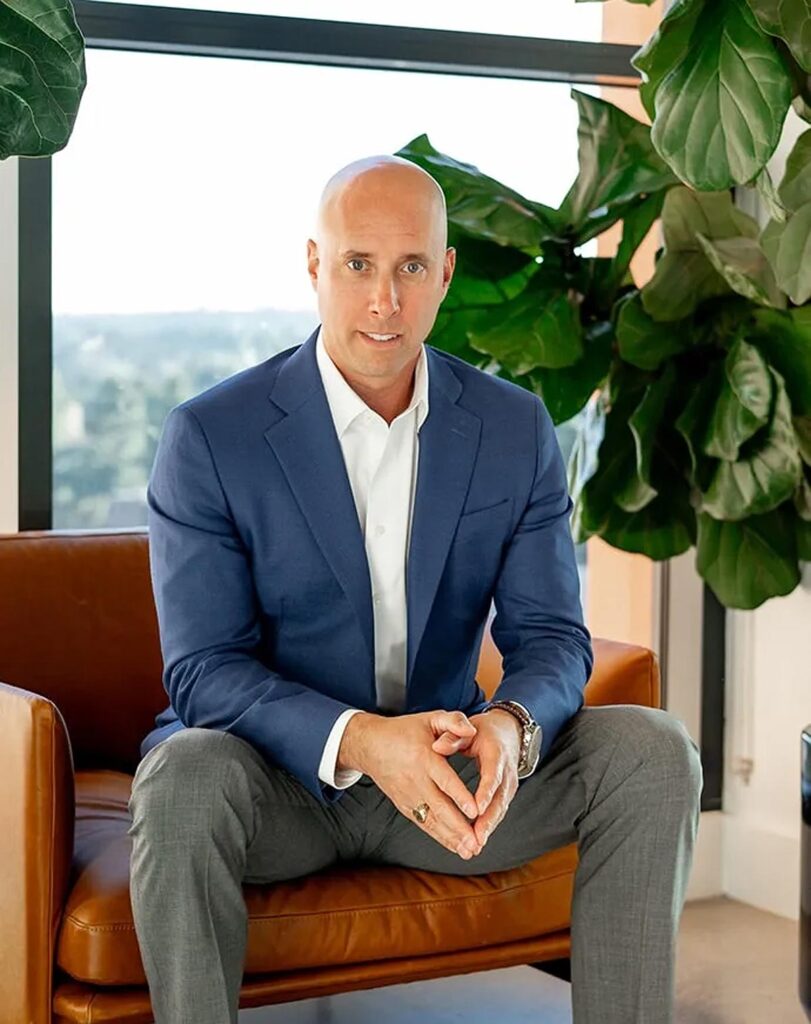
Bill Walker founded Aesthetic Brokers after leading mergers and acquisitions for a large private-equity-backed healthcare services organization. Before that he flew for the Marine Corps at the Presidential Helicopter Squadron and commanded a squadron in combat. He knows how an investor values a practice, and how to make sure that value lands with you, not the buyer.
Talk with Bill about your practiceStart with a confidential, two-minute read on where you stand.